

TL;DR — Acrylic vs gel nails comes down to one thing: acrylic is a hard, rigid overlay made from liquid monomer and polymer powder, while gel is a flexible, glossy polish cured under a UV or LED lamp. Both last about 2 to 3 weeks. Choose acrylic for long, dramatic extensions and extra strength; choose gel for a natural look, high shine, and gentler flexibility.
Acrylic vs Gel Nails: The Quick Verdict
Acrylic nails are a hard, durable overlay made by mixing liquid monomer with polymer powder that air-hardens on the nail, while gel nails use a pre-mixed gel polish cured under a UV or LED lamp for a flexible, high-shine finish. That single structural difference — rigid acrylic versus flexible gel — drives everything else about how they feel, wear, and break.
Both options last roughly 2 to 3 weeks before a fill or removal, so lifespan alone rarely settles the debate. The wear pattern differs: acrylic tends to lift at the edges, while gel is more prone to chipping or peeling once its seal breaks.
Here's the fast recommendation. Pick acrylic if you want long, bold extensions or you have weak nails that need serious reinforcement. Pick gel if you want a lightweight, natural-looking manicure with glass-like shine and slightly less bulk. If you'd rather skip the salon entirely, gel nail stickers are a lower-cost, no-lamp third path we cover at the end.
What Are Acrylic Nails?
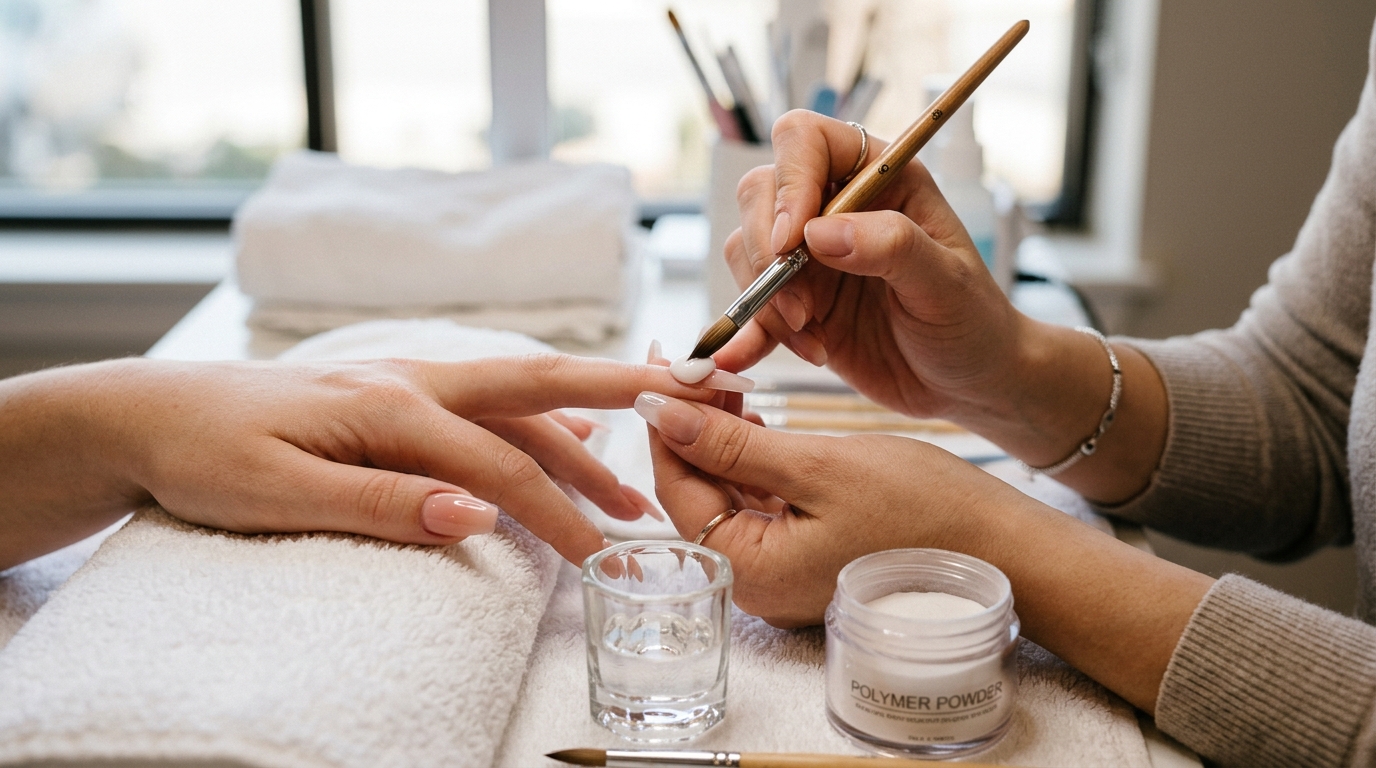
Acrylic nails are a nail enhancement created by combining a liquid monomer with a polymer powder, which forms a dough-like bead that a technician sculpts onto the nail and shapes before it hardens. The mixture air-dries and cures on its own — no lamp required — producing one of the hardest, most rigid overlays available.
Because acrylic sets into such a tough shell, it's a go-to for dramatic length and structural strength. Nail technicians use it for full extensions, sculpted tips, and reinforcing nails that are thin, brittle, or prone to breaking. The trade-off is that acrylic feels thicker and less natural than gel, and its rigidity means a hard knock can crack the whole overlay rather than flex with it.
Application has one well-known downside: the monomer gives off a strong chemical odor during the process, which is why salons run ventilation. A full acrylic set typically takes 45 to 90 minutes depending on design and length. When properly maintained with fills every 2 to 3 weeks, acrylics can be worn continuously for months. Beauty schools like Modern College of Design point to that combination of strength and length as acrylic's defining advantage.
What Are Gel Nails?
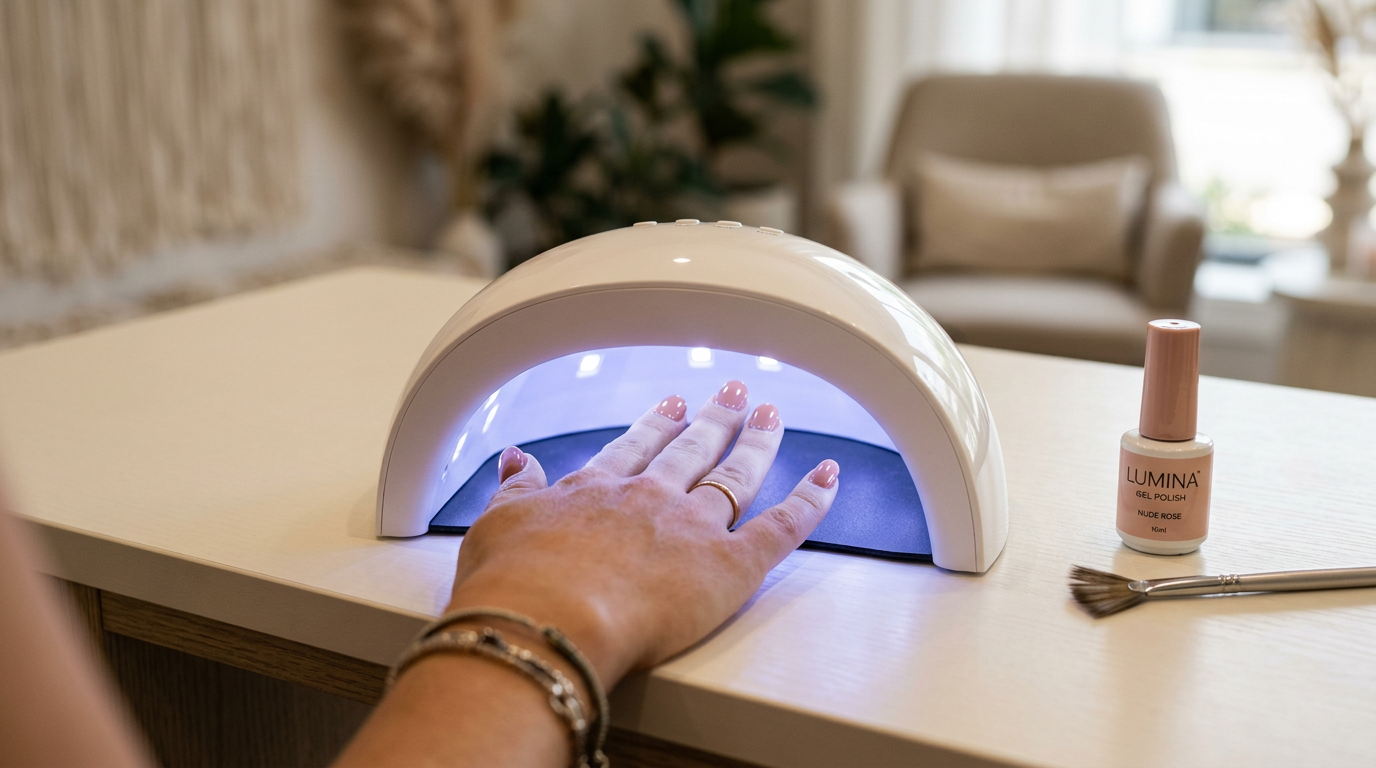
Gel nails are a manicure built from a pigmented gel that stays liquid until it's cured — hardened — under a UV or LED lamp, usually in 30 to 60 seconds per coat. The result is a flexible, natural-looking finish with a glossy, glass-like shine that acrylic can't quite match.
Unlike acrylic, gel produces no strong fumes during application, so the experience is more comfortable for people sensitive to smell. There are two main types worth knowing. Soft gel (often sold as gel polish or the brand-familiar "gel manicure") soaks off in acetone and is used for color on the natural nail. Hard gel is denser, doesn't soak off, and can build length like acrylic — it must be filed away instead.
A newer option, Gel-X, uses a pre-shaped soft-gel tip bonded to the natural nail and cured under a lamp, giving extension length with a lighter, more flexible feel than acrylic. Because gel flexes with your natural nail, it resists cracking under everyday pressure but can chip or lift once the seal at the edge breaks. If you like the gel look but want to skip the lamp and salon chair, gel nail wraps mimic the same glossy finish at home. Cosmetology programs such as Bela Beauty College note that gel's flexibility and shine are what draw most clients to it.
Acrylic vs Gel Nails: Durability, Cost, and Removal Compared
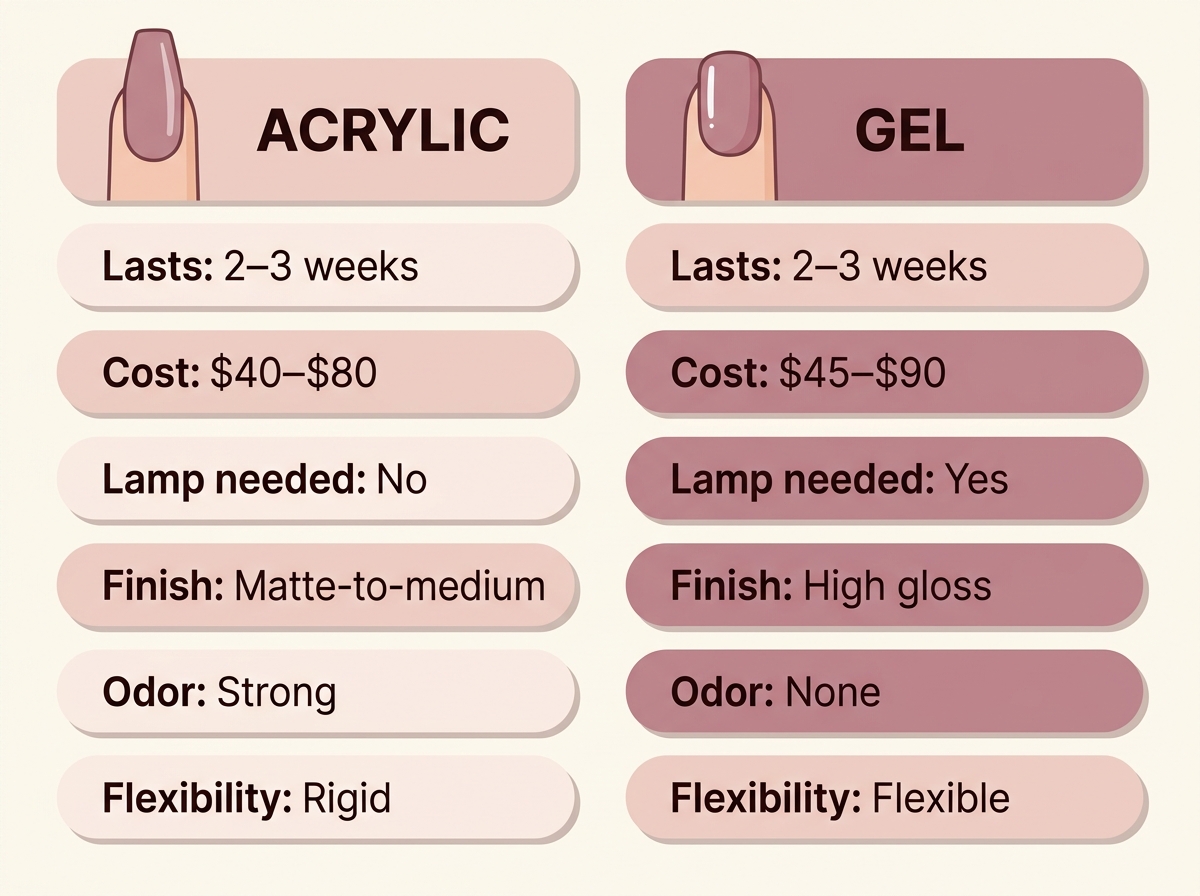
Acrylic and gel nails both last about 2 to 3 weeks, but they differ on cost, removal, flexibility, and finish. The table below breaks down the head-to-head so you can match the right option to your priorities.
| Attribute | Acrylic Nails | Gel Nails |
|---|---|---|
| Lifespan before fill/removal | 2–3 weeks | 2–3 weeks |
| Typical salon cost (CAD) | $40–$80 for a full set | $45–$90 for a full set |
| Removal method | Acetone soak plus filing/buffing | Acetone soak (soft gel); filing (hard gel) |
| Flexibility | Rigid and hard; cracks under hard impact | Flexible; chips or peels once the seal breaks |
| Finish/shine | Matte-to-medium; needs top coat for gloss | Naturally high-gloss, glass-like shine |
| Repair ease | Easy to patch and refill in salon | Harder to spot-repair; often needs redo |
| Application lamp needed | No | Yes (UV or LED) |
| Odor during application | Strong monomer smell | No strong fumes |
Gel usually costs a few dollars more per set because of the lamp time and product, but acrylic tends to win on repairs — a lifted corner can be refilled cheaply, whereas a chipped gel manicure often means a full redo. For a side-by-side on how these compare to at-home wraps, see our breakdown of nail wraps vs gel polish and which lasts longer.
Which Causes More Nail Damage?
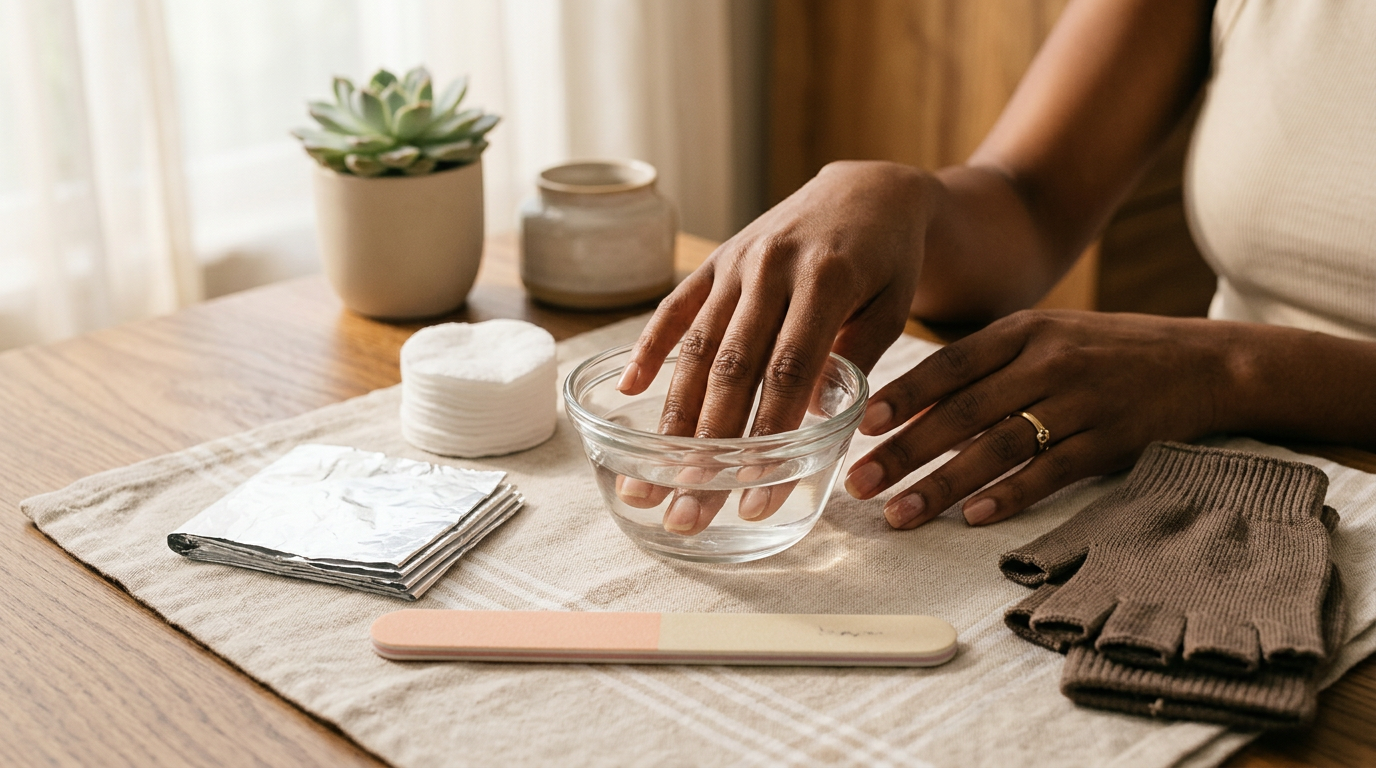
Most nail damage from acrylic or gel comes from improper removal, not from the product sitting on your nail. When either is picked, peeled, or ripped off, it takes layers of the natural nail plate with it — the single biggest cause of thinning, weak, and sensitive nails.
Acrylic carries a filing risk: because the overlay is so hard, technicians buff and file it down before soaking, and an aggressive hand can grind into the natural nail. Gel carries a peeling risk: soft gel is designed to soak off in acetone, but people who get impatient and peel a lifted edge strip the top layers of the nail plate along with it. Neither product is inherently more damaging when applied and removed correctly.
Gel does add one concern acrylic doesn't — repeated exposure to UV lamps. The U.S. Food and Drug Administration classifies nail curing lamps as low-risk when used as directed, but recommends fingerless UV-protective gloves or sunscreen on the hands for frequent users. LED lamps cure faster and shorten that exposure.
The safest approach for both is patience and a trained technician. Book a proper soak-off, never peel, and give your nails an occasional break. Reddit's r/Nails community repeatedly echoes the same lesson in gel vs acrylic threads: the damage people blame on the product almost always traces back to how it came off.
Which One Should You Choose?
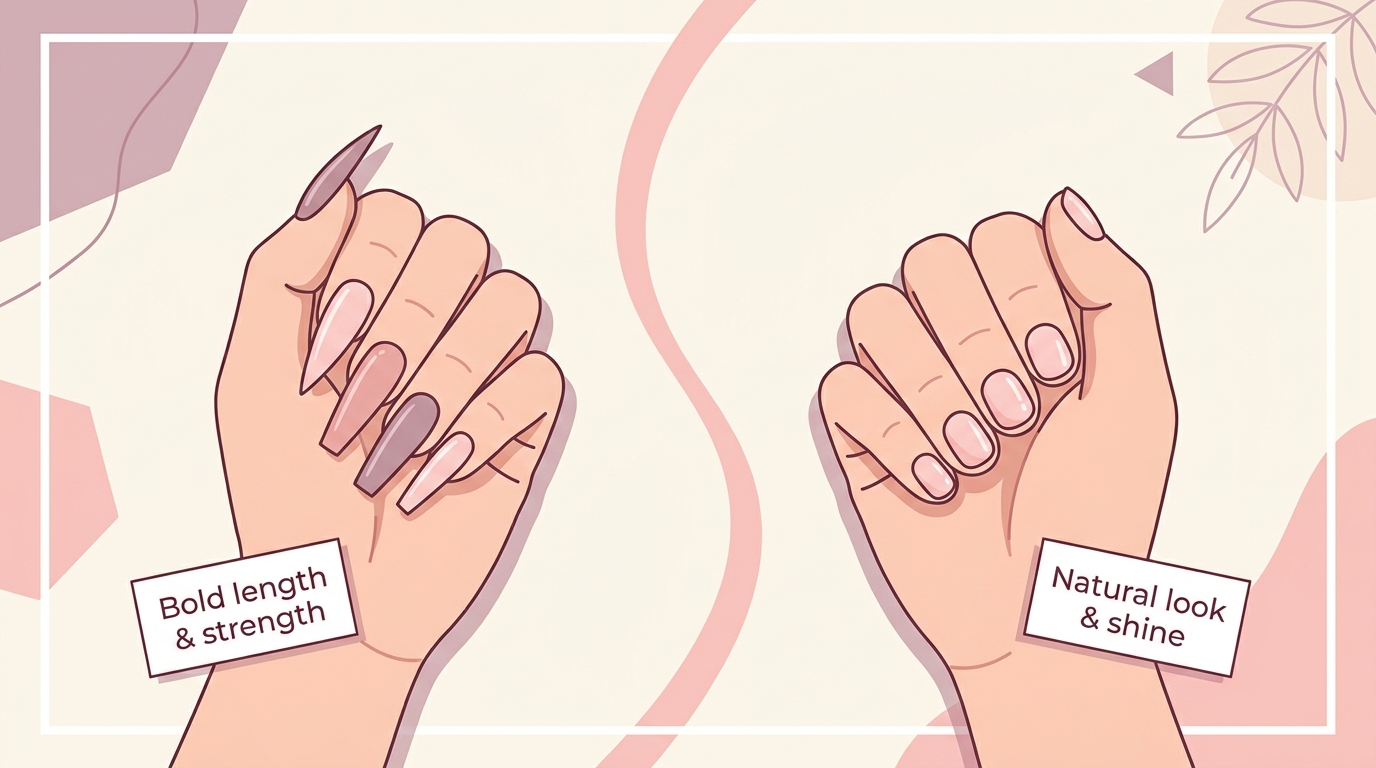
Choose based on the look you want, your natural nail strength, and how much time and money you're willing to spend. Here's how the two options map to real situations:
- Choose acrylic if you want long, bold extensions. Its rigidity holds dramatic length and shapes — coffin, stiletto, extra-long square — without bending or snapping.
- Choose acrylic if your nails are weak or thin. The hard overlay acts like armor, protecting nails that break easily and giving them room to grow underneath.
- Choose gel if you want a natural look with high shine. Gel's flexibility and glass-like gloss read as "your nails but better," ideal for shorter, everyday lengths.
- Choose gel if you dislike fumes or bulk. No strong monomer smell, and a thinner, lighter feel on the nail.
- Consider your budget and time. Acrylic runs about $40–$80 CAD a set and is cheaper to refill; gel runs about $45–$90 CAD and often needs a full redo when it chips. Both take 45–90 minutes in the chair.
- Consider an at-home route. If salon cost, time, and removal hassle add up, gel nail stickers and wraps deliver salon-style color without a lamp or filing.
No single option wins for everyone. Match the strengths above to your priorities and you'll land on the right one.
A Lower-Commitment At-Home Alternative
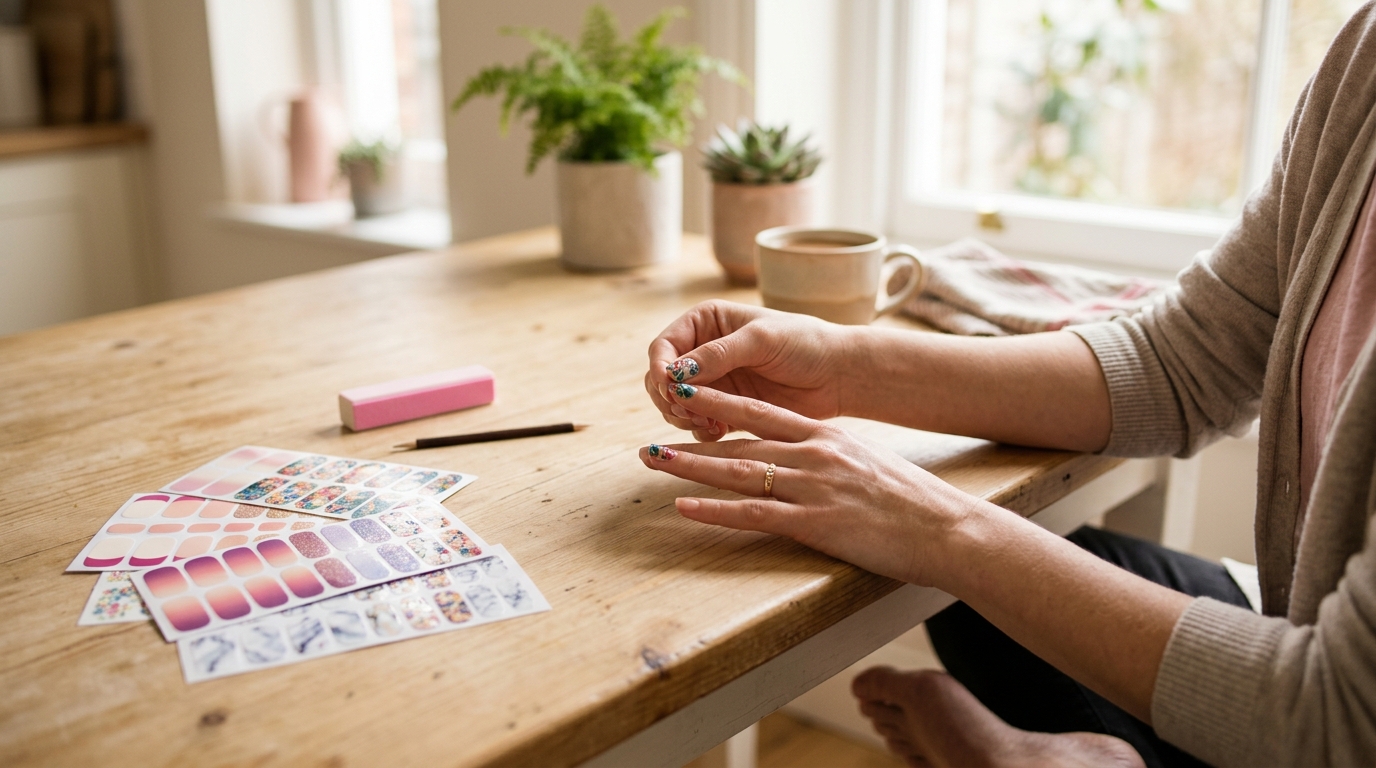
Nail wraps and gel stickers are a third option that gives you salon-style nails at home without the cost, lamp, or long removal. Nailwraps.ca, a Canadian brand also known as ManicureFX, makes wraps from real nail polish ingredients, so you get genuine polish color and finish in an adhesive strip you press on and shape to your nail.
The practical wins are hard to ignore. A set of standard wraps costs $4.99 CAD, a fraction of a $40–$90 salon visit. They last up to 10 days, require no drying time, and fit all nail sizes. Peel-off wraps need no UV lamp and no filing to remove — which sidesteps the removal damage that causes most acrylic and gel problems.
You won't get the length of a sculpted acrylic extension or the exact build of hard gel. But for everyday color, French tips, ombré, and glitter designs applied in minutes at your kitchen table, wraps are the easiest low-commitment path. Nailwraps.ca ships locally from a Canadian warehouse with a lowest-price guarantee. For a deeper look at how they stack up, read our nail wraps vs gel nail polish guide.
Key Takeaways
- Acrylic is a hard overlay of liquid monomer plus polymer powder; gel is polish cured under a UV/LED lamp.
- Both acrylic and gel nails last about 2 to 3 weeks before a fill or removal.
- Most nail damage comes from improper removal — peeling or aggressive filing — not the product itself.
- Salon acrylic runs about $40–$80 CAD a set; gel runs about $45–$90 CAD and is harder to spot-repair.
- Nailwraps.ca wraps cost $4.99 CAD, last up to 10 days, and need no lamp or filing at home.
Frequently Asked Questions
Do acrylic or gel nails last longer?
Acrylic and gel nails last about the same — roughly 2 to 3 weeks before you need a fill or removal. The difference is how they fail: acrylic tends to lift at the edges, while gel is more likely to chip or peel once its seal breaks. Acrylic is often easier and cheaper to refill between appointments.
Are gel nails less damaging than acrylics?
Neither is inherently more damaging when applied and removed correctly. Most damage comes from removal — peeling gel or aggressively filing acrylic strips layers off the natural nail. Gel adds mild UV lamp exposure, which the FDA rates low-risk but suggests protecting your hands for. A proper salon soak-off is safest for both.
Can you switch from acrylic to gel nails?
Yes. Have a technician fully remove the acrylic first — soaking and gently filing it off rather than prying — then let your natural nails recover before applying gel. Switching directly without proper removal risks trapping damage under the new set. A short break between the two helps weak or thinned nails rebuild strength.
Which is cheaper, acrylic or gel nails?
Acrylic is usually slightly cheaper, running about $40–$80 CAD for a full set versus roughly $45–$90 CAD for gel, and acrylic refills cost less than redoing chipped gel. At-home options are cheaper still — Nailwraps.ca gel-style wraps cost $4.99 CAD per set and skip salon fees entirely.
Can you do acrylic or gel nails at home?
Both can be done at home, but acrylic and gel require practice, the right products, and a UV or LED lamp for gel. For easier, lower-commitment results, peel-and-stick gel nail wraps like those from Nailwraps.ca need no lamp or filing, last up to 10 days, and fit all nail sizes.